SINGAPORE 60's: ANDY's POP MUSIC INFLUENCE IS A PERSONAL MUSIC, MEMORY TRAIL. BLOGGER DOES NOT OWN THE RIGHTS TO VIDEOS, AUDIO TRACKS AND IMAGES. THEY ARE UPLOADED FOR FUN, EDUCATIONAL, ILLUSTRATIVE PURPOSES AND HAVE BEEN CREDITED. BLOG IS NOT SPONSORED NOR ADVERTORIAL IN ANY WAY WHATSOEVER. INFORM BLOGGER OF COPYRIGHT ISSUES AND POST WILL BE DELETED IMMEDIATELY. DO NOT COPY THE POSTS; GET PERMISSION N CREDIT ME IF YOU DO. ANDY LIM LA (NOVEMBER, 2008) -
(新加坡六十年代安迪的流行音乐影响力), SUDI MAMPIR !
Good friend Richard Rajoo felt there was nothing he could contribute for the blog when I wanted to interview him. A humble person indeed but when we chatted about Chinese songs, and he's very informative about them, he had a short story to relate. Hopefully he will tell us more the next time. Thanks so much Richard.
"Good morning,
These melodies are etched in my mind... I hear my mum singing in her hi-pitched voice, as she prepares our family's meal in the kitchen, I can still recall her in her samfu [Chinese blouse n pants outfit], stir-frying the vegetables in the kitchen at our Tiong Bahru pre-war flat that we lived in.
🙏🏻R.I.P. Mum.
And I enjoyed the sight and her voice singing along...👍🏼80 years ago, 🤦! Yao Li's song... till this day, every once in a while, the sentimental melodies still play back in my mind..."
Author: Richard Rajoo.
Today Richard Rajoo goes along Charity Roads and at Senior Corners to perform now and again, during his free time. A kindhearted man indeed. He sings and usually accompanies himself on the guitar. Richard knows many songs and is lyrical wise, emphasizing the importance of words and placings.
UP TO 10,400 VIEWS - 38 COMMENTS My Lunar New Year Posting 2018 The Song: Like the fun Christmas song, Jingle Bells and other festive oldies played during the season, Chinese New Year (CNY) welcoming Spring songs have fallen into the same collection of a totally commercialized cacophony of chorus vocals, digital keyboard music, clashing cymbals and gong sounds. As we usher in the Lunar New Year, the once warm and spirited melodies have now become part of the brash lion dances, red-coloured buntings, lanterns and pussy-willows we find everywhere. And the melodies are played non-stop for three or more weeks. Like the common ang-pow*, collected during festive time, the song Gong Xi, Gong Xi like other CNY melodies, is just as common and sung extensively during the period with other ones. Sweet melodies have become a ruckus. And sometimes we cover our ears.
姚莉,姚敏 恭喜恭喜Yao Li, Yao Min 'Congratulations Congratulations' by cdman88. The Composer: But here's the punch-line. Gong Xi, Gong Xi isn't a CNY song at all and if you know its origin perhaps you will appreciate this composition with more respect.
In Chinese, Gong Xi doesn't mean Happy New Year but Congratulations or a wish for your happiness and prosperity. It was composed after the second Sino-Japanese War in 1945 to celebrate and honour the freedom China achieved after their victory over Japan. Famed and accomplished Chen Gexinwho introduced Rose, Rose I Love You, Shanghai Nights andThe Blossom of Youth to the world, penned Gong Xi, Gong Xi and composed the music in Shanghai in 1945 with much patriotism and fervour. During the war and Japanese Occupation, he had been jailed and tortured for writing such songs. Because of his imprisonment, this particular melody was written in a minor key which, according to many musicians, gives the tune a melancholic edge, a tinge of desolation.
Composer Chen Gexin. (陳歌辛)
The Singers: But famous Shanghai diva Yao Li, one of the seven respected divas in pre-war China, recorded it with her brother Yao Min and gave it the sparkle. This version doesn't carry the joy and merriment like later versions do but rather a quiet celebration of achievement and freedom (YouTube video). The words echo the sentiments: After much difficulty Experiencing so much discipline How many hearts are looking forward To the news of Spring Congratulations (X6). I had learnt it from my mother but in tune only with its easy refrain. She was a gentle lady who also taught me other Chinese goldies, especially the ones composed from the 1940s and earlier. Appreciate the song when you hear it now. And don't take CNY for granted. A Happy Lunar New Year to all. Connect: http://singapore60smusic.blogspot.sg/2012/08/searching-for-my-favourite-chinese.html
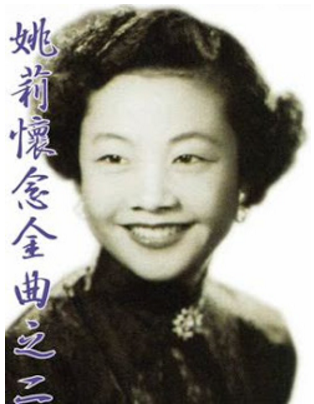
Yao Li (姚莉)
The Language Chinese script Songs: Gong Xi Gong Xi. (恭喜恭喜) Rose, Rose I Love You(玫瑰玫瑰我愛你), Shanghai Nights (夜上海) The Blossom of Youth (花樣年華) Composer: Chen Gexin. (陳歌辛) Singers: Yao Li (姚莉) Yao Min (姚敏) *ang-pow (red-packets with cash).
'Rose, Rose I Love You' composed by Chen Gexin. (陳歌辛)
This article is an original post and information is derived from my own background and from the Internet.
Yao Li has passed away on 19 July 2019 from The Malay Mail.
Chinese Mandarin oldies: 那個不多情 姚莉 (Yao Li).
YouTube: by sydneylam19
Songs I Love
If it weren't for the magic of the computer, Google and YouTube I would never have been able to retrieve or even listened to the Chinese oldies by the great prewar songstress Yao Li. In fact, I didn't even know the singer's name nor the song title. There was an evening I googled, Chinese Mandarin Oldies found the above video and recognised the melody immediately. Memories of my childhood flooded my data bank.
PYE Radio 1950s in our living room shophouse.
These songs were my mother's favourites and I used to listen to them in the 50s when she tuned in to some Chinese programmes from the radio. I am not sure if they were from our own stations or from overseas but the family's PYE radio certainly took us to places unknown and songs so beautiful.
Today I wish to share these songs especially with those who are not familiar with Mandarin songs from the 1940s. But first... the singer. Yao Li or Yáo Xiùyún (姚秀雲) was raised in Shanghai and rose to popularity singing in one of the city's dance halls. She had her songs broadcasted over the radio in 1935 at aged 13 and recorded her first single with Pathe Records at 14 with Yan Hua (嚴華) called Xin xiao fang niu (新小放牛) or the new cowherd. She also often recorded as a duo with her pop singer brother. At that time she became a rival of Zhou Xuan, and was called Silver Voice as opposed to Zhou Xuan's Golden Voice (check Labels below). Yao Li's success in Shanghai was partially due to the vocal training of the Russian diaspora court musicians.
In the 1940s, she was encouraged to imitate Afro-American singers seen in Hollywood movies. These movies were available in Shanghai. Her voice improved tremendously and in the 50s she developed a singing style like her idol Patti Page. Because she got married and had family Yao Li halted her career in 1947. Following the Communist power seizure in China in 1949, popular music was banned and Yao fled to Hong Kong in 1950. She continued singing and recording as these became hits. Within five years she made the popular 桃花江 (Peach Blossom River) as her singing voice was used in films to dub those of famous Chinese actresses. Soon the featured songs became hits for Yao Li too. In 1967 she halted her singing career and within two years acquired a position as an executive with EMI Music Hong Kong. She returned to performing in Taiwan from 1970 and retired in 1975.
The above song on YouTube is one that I listen to very often and the melody never strays from my mind. Roughly translated this song, (姚莉 -那個不多情 姚莉) means, That's Not Sentimental. Ironical. Another favourite of mine is The Spring Breeze Kisses My Face (姚莉 - 春風吻上我的臉) recorded in 1956.
There are still many other Chinese melodies swimming in my mind and if I find them I shall share them on this blog.