Showing posts with label kampongs. Show all posts

Sunday, August 07, 2022

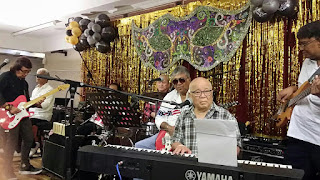
A National Day Special 2022: Social Harmony In Kampong Amber: Pianist Baba Sam Gan

Renowned pianist Sam Gan at the keyboard with 
Michael Bangar in sunglasses and Horace Wee in black.

UP TO 1,300 VIEWS 

Sam Gan is a baba or peranakan [Straits-born], so the reader might have to go through Malay words in his letter below but they have been carefully explained, so go a little slow to read. Unless you are familiar of course...

Hi Andy,

Bringing back memories of my family and me growing up in Kampong Amber [Amber Village], from 1947 to 1953. Best years of my childhood... Malay, Chinese, Indians, all living in harmony... We played, ran around barefooted, shirtless, in the rain, in the sunshine. 

According to the time of year, playing gasing [top spinning], layang layang [kite-flying] ,keeping fighting spiders in match-boxes, fighting fish in glass jars, rubber-bands competitions, *goli [marbles], catching, rounders [simple baseball] not many arguments, but a lot of fun. 

Playing marbles *[goli] in the 1960s

We were very proud of our kampong [village], so when asked, "Tinggal di mana?" [Where do you live?]

We would proudly reply, " Kampong Amber!" I still consider myself a Kampong Boy from Kampong Amber! 

Puasa Time [Fasting Month] was different with the Carbide Cannons made from Bamboo, booming in the evenings; the Kenduris [food social gathering] and kompangs playing at Malay Weddings. 

Then there's the rains that flooded our Kampong every year during the N.E. Monsoon from November to late January; kids selling fresh nasi lemak [coconut rice and fried fish with chilly-paste] and kueh kueh [Malay cakes]. They come in the mornings for ten cents a bungkus [banana-leaf packet] for breakfast. 

The Mee Siam [spicy Thai noodles] from the Javanese lady selling her tikar2 [mats], and the 30 cents takeaway (bring your own duck egg) Mee Goreng [fried noodles] from the Mamak [Indian] provision store , Plain Roti Prata was five cents a piece and a glass of Kopi [coffee] and Teh Susu [tea and milk] costs ten cents from the **Sarabat [Indian drink-hawker] stall next to the Chinese Swimming Club new pool at Amber Road.

**Selling Sarabat Tea [1963]. 
Photo credit: MITA/NAS Geraldine Soh.

Then there was the Pasar Malam [night market], Chinese Wayang [Chinese street opera] during the Chinese 7th month and of course the Orang Minyak [Oily Man] stories to frighten the young girls and ladies to be home before dusk. ..these are just some of my memories of My Kampong Amber!... what a time to grow as a boy in the old days, 75 years ago.

[It took me a bit to edit this one Sam, but it's well worth it. Thank you.]

NB: From what I understand, having read Finance Minister & Future PMs, Lawrence Wong's Facebook posts, his parents lived in Kampong Amber in the 60s.

This article is original and has been copyrighted.

Google image sources have been identified individually.

'Di Tanjong Katong' with ***Sakura Teng. 
YouTube Video by Medan Fan.

***One of the more renowned lady pop singers from Singapore 60's.

'Di Tanjong Katong' is a traditional Malay folk song describing the East Coast seaside. It is close to Kampong Amber where Sam Gan used to live.

Sam Gan: 'I Love You For Sentimental Reasons'
YouTube Video by Sam Gan.

A HAPPY NATIONAL DAY 2022 TO ALL READERS, 
CONTRIBUTING WRITERS, FRIENDS & FAMILY.
ENJOY BUT STAY SAFE.

Wednesday, May 12, 2021

Raya 2021 - Paul Ibrahm [Tania], Julie Sudiro, Alina Rahman, Aziz Jaafar, Wahid Satay.


WISHING ALL MUSLIM READERS AND FRIENDS 
SELAMAT HARI RAYA AIDIL FITRI 2021
Julie Sudiro, Aziz Jaafar, 
Wahid Satay, Alina Rahman

UP TO 2,100 VIEWS , 12+ COMMENTS

My friendship with Paul has lasted 60 years...

Paul Ibrahm (Tania) is a good friend, having known him since we were in a band called The Velvetones. This period was the early 1960's when every pop guitar group in Singapore was in its infancy. 
The kampong bands (Malay = village) started in the living rooms or compounds of houses. Such similar styled bands in the West would be called, garage bands.

The Velvetones used to practise in a huge bungalow diagonally across from the former Chief Minister of Singapore's corner home at the T-junction of Sims Avenue and Lorong 39 (Malay = Lane). 

It was there that I met Paul, young and handsome, fashioned with an Elvis Presley haircut with some sideburns showing. Usually with a short-sleeved shirt and drain-pipe trousers, he would come over in his usual casual and easy manner to belt out songs with the Velvetones. He's good.

We kept in touch for a few years now and during our chats he told me about his home at Lorong 40 which was just across Geylang Road from Lorong 39.

So it is here that I take my leave and allow him to relate his story. Thanks Paul. 
Chand-ni Raat, Siang Lim Park, Lorong 40.
Johari Salleh went on to become 
RTM Orchestra Conductor,
Aziz Jaffar, actor for Malay Film Productions.
"Yusof B (composer of Nona Nona) is my uncle, my late mother's elder brother. B stands for Bluguk. Wak Rahman, father to well-known singer Alina Rahman was Yusof B's younger brother. There were four siblings and my mother was Fatimah, Yusof B's sister. I have lost touch with Kak (Sis) Alina, I wish somebody could provide me with her phone number.

So much of Malay music originated from Lorong 40. Osman Ahmad lived there; Johari Salleh joined Radio Talivishen Malaya (RTM) and became their conductor. 

The famous Indian band, Chand-ni Raat was near my home in Siang Lim Park. It was probably the first rock and roll local band in Singapore. It won so many awards during band competitions. 
Yusoff B

Wandly Yazid
Some residents who lived at Lorong 40 went to become well-known actors when they joined the Cathay Keris Studio at Jalan Ampas. These Malay gentlemen were Aziz Jaafar, comedian Wahid Satay and Ahmad C, to name just a few.

Then there was composer Wandly Yazid, singers Jasni and Julie Sudiro. Julie used to hang out at our house almost every other day as she and Alina Rahman would come for lunch time and again to their aunt's and uncle's home.''

Paul, with his talent and versatility went into the limelight during the 60s and beyond and joined one of the best rock bands in this region, TANIA. He was with a few other bands before joining this forceful group but that's another story.

Comments in Malay are welcome too!

Thanks to Paul Ibrahm
for the above article.

Images - Google; A Paul Ibrahm Personal 
Collection. Copyrights Reserved.
YouTube Videos
Alina Rahman and The Rollies
'Chinta Bahagia'. YouTube video by Keon 60s

Wahid Satay - Senorita Lembu Tua'
YouTube Video dari: Doxok DX
Terima Kaseh

Images: Google, Paul Ibrahm, Yusnor Ef, Doxok DX.

Wednesday, July 06, 2016

Hari Raya Puasa Kampong Visits On My Vespa

SELAMAT HARI RAYA 2026
TO ALL MUSLIM FRIENDS N READERS.
ANDY.


  UP TO 5,100 VIEWS, 
 80 LIKES, COMMENTS

A Special Posting:


Yesterday [1960s]


During the Hari Raya Aidil Fitri season in the 1960's, I used to visit my Muslim friends. It was easy, it was convenient and I needn't take a bus nor drive a car. There were no MRTs then. The afternoon sun could be cruel and be walking or cycling visits around the kampongs of Geylang and Changi could be warm and humid indeed. 

The best mode of transport then was the scooter and it was either a Vespa or a Lambretta. I used to own one, a faithful Vespa fully made in Italy that came with a comfortable rear seat and a spare tyre especially hidden below the fat behind of the vehicle. The number plate was SAB 8254 (image below: Mr Aziz on my scooter).
My good friend Aziz who lived 
@ Kampong Pachitan, Singapore 1960s.

So during Hari Raya Day at about ten in the morning, I would scoot to Kampong Wak Tanjong 
(where Sims Avenue now stands) and pay a courtesy caMrto Mr. Abdul Karim a well-known plumber and electrician in the Geylang, Paya Lebar area. 

He was an Indian Muslim, well-endowed with a huge tummy, thick, curly and shiny hair. We knew him because he rented a space at our shop front along Geylang Road to run his business. He became a family friend. 

The kueh-mueh (Malay cakes and delicacies) would be ready and I would spend time in his beautiful attap house trying out the Hari Raya cakes and Malay cookies like pineapple tarts or coconut biscuits. Mrs. Abdul Karim was just as gracious and usually dressed with her colorful baju kurong and simple selendang.

An illustration of a Bawean friend 
who lived at Kampong Melaka in the 60s.

My next stop would be Kampong Melaka, where Lion City Hotel now stands. It is very close to Sandy Lane near the Catholic Church. It would be a 10 minute ride to my good friend's home, Moyah. 


Moyah was Bawean (Boyanese) and played the guitar extremely well. The instrument was always with him and he would carry it around everywhere, in the house, around the kampong lanes and even on his scooter, strapping it on his back as he went on his household chores at Geylang Serai Market. 

He was a Beatles expert and played Deep Purple intros like they were his own compositions. And he had only a basic acoustic guitar. If only he had a solid guitar, he exclaimed. I can believe him. Yes, he would show the other boys at Kampong Melaka the riffs that he could emulate before he sang his piece. Could Moyah be one of the boys who started the Pop Yeh Yeh craze among the Malay musicians?
At his Kampong Pachitan home with 
Mr Aziz a Malay school teacher from the 60s.

By then it was lunch time and I would be gobbling Moyah's delicious lontong, beef rendang and chicken curry. Cooked by his mother, I could taste the santan (coconut milk) in the food and it would have been from the fruit itself and not from some canned product. And the satay with ketupat was unbelievable.


I would reach home with a full stomach and set out again at 4 pm to a colleague's home at Pachitan 8 (Delapan) where the present Eunos MRT line is today.  At the kampong house (image above with Mr. Aziz), I would spend hours with him and his parents, brothers and sisters. 

We were so close I would bring my Telefunken reeled tape-recorder and leave it at his home. We would record songs by Elvis, Tom Jones and Engelbert. These singers were Mr Abdul Aziz' favourite. He loved listening to P. Ramlee and Saloma songs.  One of her top hits was the original, Selamat Hari Raya.
A very close friend the late Mr Ahyar Jammari and wife 
Che Azizah, who lived at MacPherson Estate in the 1960s.

Dinner came with lauk2 (dishes) like ayam kormah, sayur lodeh, ikan belado, daging kambing and sayor-sayoran. There was always a plate of kerupok udang (prawn crackers) at centre table. Desserts would include Malay cakes and biji delima drink. By eight in the evening, I would be staggering home on my scooter, heavier and bigger with the food in me.

The above picture shows dinner at Mr Ahyar's home during another Hari Raya visit. My wife and I have been visiting his home nearly every year, even up till today. His wife cooks delicious ayam goreng (fried chicken) and sayor lodeh. By this time, but, still in the 60's, many Singaporean families would have moved to high rise apartments or HDB flats. 
Mr Eusoof Angullia [in red] who lives in the East Coast area,
with another good friend during a Hari Raya visit.

Today [2020s]


Today the tradition goes on, still visiting Muslim friends in the East Coast area. There's Mr Eusoof Angullia and his visitors (above) where friendship, food and music rule the Hari Raya visit. His karaoke set has thousands of songs, some I've never even heard of. 

They range from English, Malay, Hindi and Tamil classics throughout the years. All at the flip of the finger. And Mr Eusoof with his family sang, Besame Mucho, Paper Roses, Please Don't Tease, Casablanca, Colors of the Wind and Rindu Rasa Hati Ku.

And I drive  a car now... On beautiful roads. Not many scooters today. And the kampong houses have become modern bungalows, terraced abodes, spacious apartments and condominiums. 

Such hospitality, kindness and care.  How could I forget the neighborliness, friendliness, goodness and love of my Malay friends during such gatherings after the fasting month?
Suasana Riang (Di Hari Raya) was recorded by Junainah M. Amin in 1973. The song was composed by Kassim Masdor and the lyrics written by Yusnor Ef. It has topped the 100 List of Popular Hari Raya songs and has been played on local radio.

Images: A Private Collection; 3 from Google.
Video: You Tube from itsmeijan.


Selamat Hari Raya Aidil Fitri: Saloma 
[Official Music Video]
YooTube Video from: Hari Raya.

Malay Dishes for a Hari Raya Feast

Wednesday, July 22, 2015

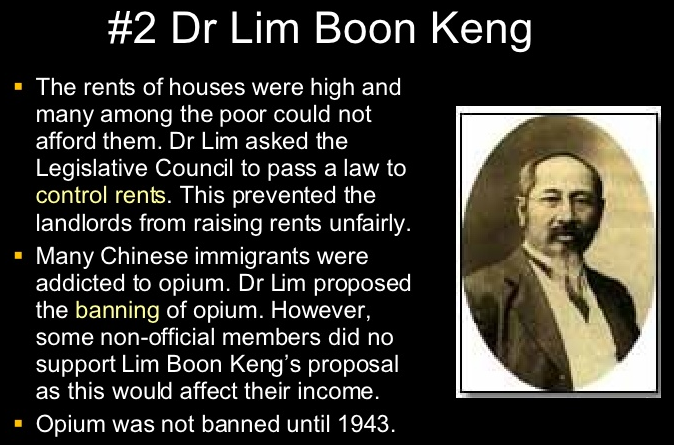
Dr Lim Boon Keng's Kampong @ Paterson Hill


                       *Grace Chang: Ja-Jambo: Video MrHuang HK
                                
Ms CY Lin has been a regular contributor of this blog. In a recent reply to my last posting about Hari Raya songs and kampongs, she mentioned the happy days she spent living in a bungalow with a unique roof and playing with friends of different nationalities. Below is her letter.
Hey Andy,

1 Paterson Hill in the 1950s - 1973 fits the category of a kampong where different races lived in close proximity, and children played and learned from one another.  This was the residence of Dr Lim Boon Keng, a pioneer physician and social reformer who founded Singapore Chinese Girls' School.


My family of six rented a room ( S$30/- monthly rental raising to S$50/- in the later years) in his huge two-storey bungalow which had an atap roof.  He and his family lived on the upper floor and leased out some rooms on the same level to British forces personnel.  The ground floor rooms were for the locals. (The image is only an illustration and not the home of Dr. Lim. Image 2 is a S$50/- Straits Settlement Singapore currency which was still used in the 1950's.)

Each room was relatively large but all tenants shared a common bathroom and a toilet. Having a benign landlord in the good doctor, my ingenious father was able to single-handedly partition three small bedrooms, a washing area and a kitchenette.  Later, with us as his helpers, a toilet was added - talk about child labour!
An outhouse was turned into a sawmill run by a three-generation Chinese family.  Another became a motor workshop.

My siblings and I played with Dr Lim's grandchildren, his Malay gardener's children, the Chinese  kids and some Indian-muslim ones from the house on Grange Road.  We spoke English, Malay, Hokien and Cantonese.


There's **a big field in the compound with fruit trees for the picking - cherries, rambutans, chikus, pakia (guavas) and buah susu (passion fruit).  The larger trees offered respite when the weather was hot - we'd be climbing and resting in our little tree house.  


Those were happy days.  And yes, 1 Paterson Hill was also the birth place of the pop group ***The Decibels. 

Lin.

Footnote:

*Grace Chang, with her beauty and vivacity , could have been an icon even today.  She had appeared in more than 30 movies from 1953 to 1964.  Her 1957 movie Mambo Girl was a very big hit. Chang was one of the most popular stars from town to kampong. She would be 82 this year (2015).

The song, Ja-Jambo could be a musical representation of what the world was in the 1950's, raw, wild and waiting. We had WWII, and after 15 years of settling in, would have awakened to a new dimension in life. 

**Could be why the area is called Orchard Road since an orchard is a big field with lots of fruit trees.

***Read about The Decibels:

http://singapore60smusic.blogspot.sg/2012/01/decibels-65-band-in-making-part-one.html

http://singapore60smusic.blogspot.sg/2012/02/decibels-band-in-making-1965-1970-part.html