Showing posts with label Senior Singers and Bands. Show all posts

Sunday, March 10, 2024

'Music Maker' [1963] Richard Anthony: Dedicated To All Music Makers


   UP TO 900 VIEWS,     
15 CHATS, COMMENTS  

'Music Maker' sung by Richard Anthony. 
YouTube Video by: RockFur2
Richard Anthony passed away on 19.04.2015.

Romanticism At Its Most Eager

Richard Anthony:

Many music lovers are aware of Ray Anthony the 1950's famous band leader and trumpeter. Shakespearean lovers would be aware of Mark Antony, Caesar's loyal friend in the play who was also with Cleopatra. 

Not many though would remember Richard Anthony, the French singer who recorded a song that I love, even till today. 

This post is dedicated to all music makers... 

French singer The late Richard Anthony
sings 'Music Maker'

Music Maker

[1] Let them build a tower to the stars

I don't care what others do

I just wanna be your music maker

And sing my song to you


[2] Let them build a bridge of steel and stone

Mountain high and oceans long

I just wanna be your music maker

And link our hearts with a song


Long as, I have music and the words to sing

If you're, there to sing to

I have everything


[3] Let the others look for fame and fortune

This is all I want to do

I just wanna be a music maker

And sing my song to you


Long as, I have music and the words to sing

If you're, there to sing to

I have everything


[3] Let the others look for fame and fortune

This is all I want to do

I just wanna be a music maker

And sing my song to you

I just wanna be a music maker

And sing my song to you...


Composers: Sid Tepper n Roy C. Bennett 

Orchestra: Arranged/conducted by Ivor Remonde

Columbia Records 1963.

Band leader / trumpeter 1950's
Ray Anthony

Julius Caesar's friend. With Cleopatra too.
 Mark Antony.

Any more Anthonys that you might remember?
Hmmm! What about Marc Anthony, who used 
to be with Jennifer Lopez? A list indeed...

And the songs Richard Anthony sings?
He sings English songs in French too.
Do you know any of them? Here's one below:

Richard Anthony: 'Peggye Sue' in French.
YouTube Video by: sadonani59

Friday, March 03, 2023

Exciting Singapore Nightclub Singer n 70s Recording Artiste Irene Yap Tells It All

Irene, resplendent in shiny tights, 
in action at Ion Bar, Singapore 70's.
"Jambalaya, crawfish pie..."
Copyrights Reserved

UP TO 6,100 VIEWS,

100 CHATS, COMMENTS

When I met Irene at a dinner recently, I asked if she could write an article about her experience singing at Singapore's nightclubs in the 70's. Her reply came:

"My pleasure. Though I must say, once I started writing, the memories started coming back and it was a joy for me to recollect them."

And Irene's detailed description of her surroundings in the place that she sings can only be written by a lady author. And the musicians that sing with her? Top pop local stars! Thank you very much Irene.

Check her out:

Irene Yap and Hijacks 1981
'Hello Darling' [Conway Twitty]
Ion Bar Apollo Hotel,
YouTube Video.

Remembering Ion Bar

”Ladies and gentlemen, you've been listening to the sounds of The Pebbles with yours truly, Irene Yap. We'll be taking a short break, stick around and we'll see you later.”


That’s my typical announcement before we took a break after a 45-minute set
in the Ion Bar at the Apollo Hotel during an engagement in the 1970s.


We performed four 45-minute sets with a 15-minute break in between and an half-an-hour break for dinner in the hotel's coffee house - seven days a week from 8 pm to 12 am. 


To this day, I still remember walking down the steps from the stage for my break looking down or straight ahead.  I learned very early on that if I happened to look at a particular table of guests, they would wave and invite me to sit with them which meant I would have to walk to the table and explain politely that I was not allowed to do so.


That was the government's regulation in those days barring singers from socialising with guests at their tables. The rules have since been relaxed.

Rahim Hamid, Singapore's Nat King Cole 
from the 1960's, father of Rahimah Rahim.

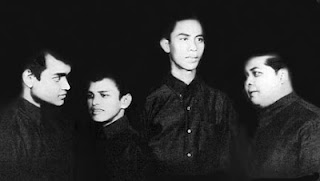
I am sure many of you will have fond memories of The Pebbles comprising Rahim Hamid [image] on drums and vocal, better known as the Nat King Cole of Singapore and the father of singer Rahimah Rahim, Jimmy Topaz on bass, Yusoff on guitar and bespectacled and quiet Henry on piano. If only I could remember their last names, I was still in my teens and they were all more than a decade or two older than me.


The Ion Bar was originally situated on the right of the hotel after you stepped into the  lobby. The low tables, cushioned sofas and chairs were in neutral grayish tones and the pretty waitresses wore long navy blue gowns with high slits.


Apollo Hotel was then the largest of three hotels on Havelock Road, the others being King’s Hotel and Hotel Miramar. It opened in 1971 comprising a curved 19-storey tower block connected to a three-storey circular block. It attracted not only  lounge-goers and food-lovers but also shoppers as it housed Isetan, the  first Japanese department store in Singapore. The hotel was later renamed Novotel Apollo before acquiring its current name - Furama Riverfront Singapore.


As a professional singer in the 70s,​ I had to sing by heart as there were no music stands to look at the lyrics. The lounge was usually crowded by 9 o'clock, the patrons being mainly males and if my memory serves me right, a beer cost $6.


One regular I remember was former national footballer S Rajagopal  nicknamed "The Camel"  whose ” banana kicks“  were a delight in the days of the “Kallang Roar” at the National Stadium.


The moment he walked in with his two buddies and saw me on stage, he would freeze, put his right palm to his cheek and very slowly fold up the palm. I would do the same on stage and  both of us would laugh - it was our form of acknowledgement to each other. 

Sober Irene,
In green,
"Chotto Matte Kudasai,
Please excuse me while I cry..."
Copyrights Reserved


As a female singer, I  had to be formally dressed in long gowns. The male musicians usually wore  black jackets . Back then in most hotels no jeans or casual wear were allowed. If you were dressed inappropriately, you would get a memo from the general manager. Towards the late 70s I was thrilled when I could switch to less formal outfits considered appropriate for stage wear.


Through the years, I returned again and again to Ion Bar performing with not only The Pebbles but also with Excalibur, Sonny Bala and The Moonglows, The Thunderbirds, The Hijacks, a country and western band featuring a male singer who yodelled and a five- piece band who were brilliant jazz musicians but came together to play lounge music.  The names of the last two bands escaped my memory. Help – does anyone of you remember who they were? 


Sonny Bala was a big man with a gentle soul and played a mean guitar. He was very well -liked by everyone around him. His signature song garnering the most requests from the patrons was I Can’t Stop Loving You.


Despite my teen years, I got along with the older musicians who were all very nice and kind to me. We had a lot of laughter on stage.  One much requested song when I was with The Pebbles was Jambalaya.  One day after I started the first line, “Goodbye Joe  Me Gotta Go, Me Oh My Oh.....” 


And Rahim, Yusoff and Jimmy would chime in cheekily, using some Hokkien [Chinese dialect] expletives, just to crack me up in a sometimes tense atmosphere.

The late Jimmy Chan, pianist extraordinaire 
and recording star, from the 1960's

They loved to tease me. I started chuckling and soon I was roaring with laughter and trying very hard to sing with them, I mean with the music. At times when I turned around to Rahim to tell him of the requests I had to do, he would give me a wink and a smile. He was always so cheerful.


Jimmy Chan [image], the piano maestro who passed away last year (2022) would often swing by to catch our final set after he finished his performance at the Mandarin Hotel lobby bar at Orchard Road.


When Ion Bar underwent renovations, it was moved temporarily to a function room on the 18th Floor. It was at this spot where I witnessed a wife pulling her husband's ear when she caught him sitting with a young woman. 


The matured, bespectacled man and his long-haired companion were so engrossed in their conversation that they did not see the plumpish woman striding angrily to their table.


Pointing a finger at him, she screamed, 'Ha, I got you!'  and started pulling his ear and dragging him all the way to the doorway. As he was a good head taller than his wife, he had to bend his head as his wife kept hollering  “Is she so pretty? Huh, is she so pretty?' 

Irene, accompanied by accomplished professionals
Excalibur: Doss, Rasif, Admad and Idros at the nightclub.
Copyrights Reserved.


The long-haired lady continued to sit coolly inside the lounge before walking up to the cashier and said, '”Give me a minute, I will be back to settle the bill”.  She walked out to the doorway and had a vociferous exchange with the wife for a few minutes. Then she walked back to the cashier to pick up the tab. 


Eventually, sometime in the late 70s, the bar  moved to the back of the hotel with a separate entrance and best of all - bigger space and stage. It was a more comfortable place to perform and I remember many regular customers requesting the same songs three or four times a night, the most popular being Summertime and Hello Darling. 


It was considered to be a pretty IN-place where celebrities and TV actors from Hong Kong and Taiwan could be spotted among the audience. 


As I recall, the most requested numbers were the Indonesian ballad Mimpi Sedeh, Tagalog favorites Anak and Dahil Sa'yo,  the Cantonese theme song from the television series, The  Man In the Net, Japanese Chotto Matte Kudasai and evergreens such as Help Me Make It Through The Night  and It's Too Late. 


Another time when I went back, the popular songs were Just The Way You Are, Emotion, Do That To Me One More Time and Sexy Eyes. In my earlier years with The Pebbles, Olivia Newton John's songs Let  Me Be There and If You Love Me Let Me Know and songs by The Carpenters were very much in demand.


Sunny Bala and the Moonglows,
hit-men with their hot songs.

As the nightly crowd swelled, the management started live music from 2 pm and engaged two female singers Brenda Terona and Jacqi Magno from the Philippines. Both singers did half-an hour -set singing and playing solo with just their guitar in between sets with The Thunderbirds and Sonny Bala and The Moonglows. 


The other local singer was Elsie Sim, and we had to sing with both bands. I was lucky to take the prime slot at 9.45 pm so I only worked a couple of hours a night for that engagement.


One memorable moment was when the band Excalibur and I got a tip from a  patron on our last night as our contract had ended. When I announced our last song for the  evening, an Indonesian male guest came up to squeeze a hundred-dollar bill between the microphone and the microphone stand holder to request for another song.  


We obliged. When the song ended,  he came up with another hundred-dollar bill for another song and then did the same for the third time.  So by the end of the evening,  three one-hundred dollar bills on guitarist Ahmad’s microphone stand were flying like three state flags. Very shyly Ahmad  took the money which was split equally among the five of us. 

She caresses her microphone 8 days
a week; now that's a long while but
loving what she does is important.
Copyrights Reserved.

Then there was this regular Chinese guest who came with a group of guys. He kept nicking flowers decorating the lounge and bringing them to me on stage after every song raising much laughter all around.


When I turned 21, there was no  better place to celebrate the occasion than at The Apollo Hotel ballroom. I approached the Assistant Manager, Mr Ishizuka, who went out of the way to give me the best ballroom and best buffet spread without corkage charges – that’s the perk of being a regular singer at the hotel!


That’s why I always enjoyed going back again and again to Ion Bar because of the great relationship I had with the management namely Mr Fujiyama - General Manager, Mr Ishizuka - Assistant General Manager, Mr Kam - F&B manager (early 70s) and Mr Long - Supervisor Ion Bar (early 70s)


And although I performed in many lounges in my musical career, it was at Ion Bar that I sang in 1981 with The Hijacks for the last time  before I formally retired to get married and move to the United States with my husband.

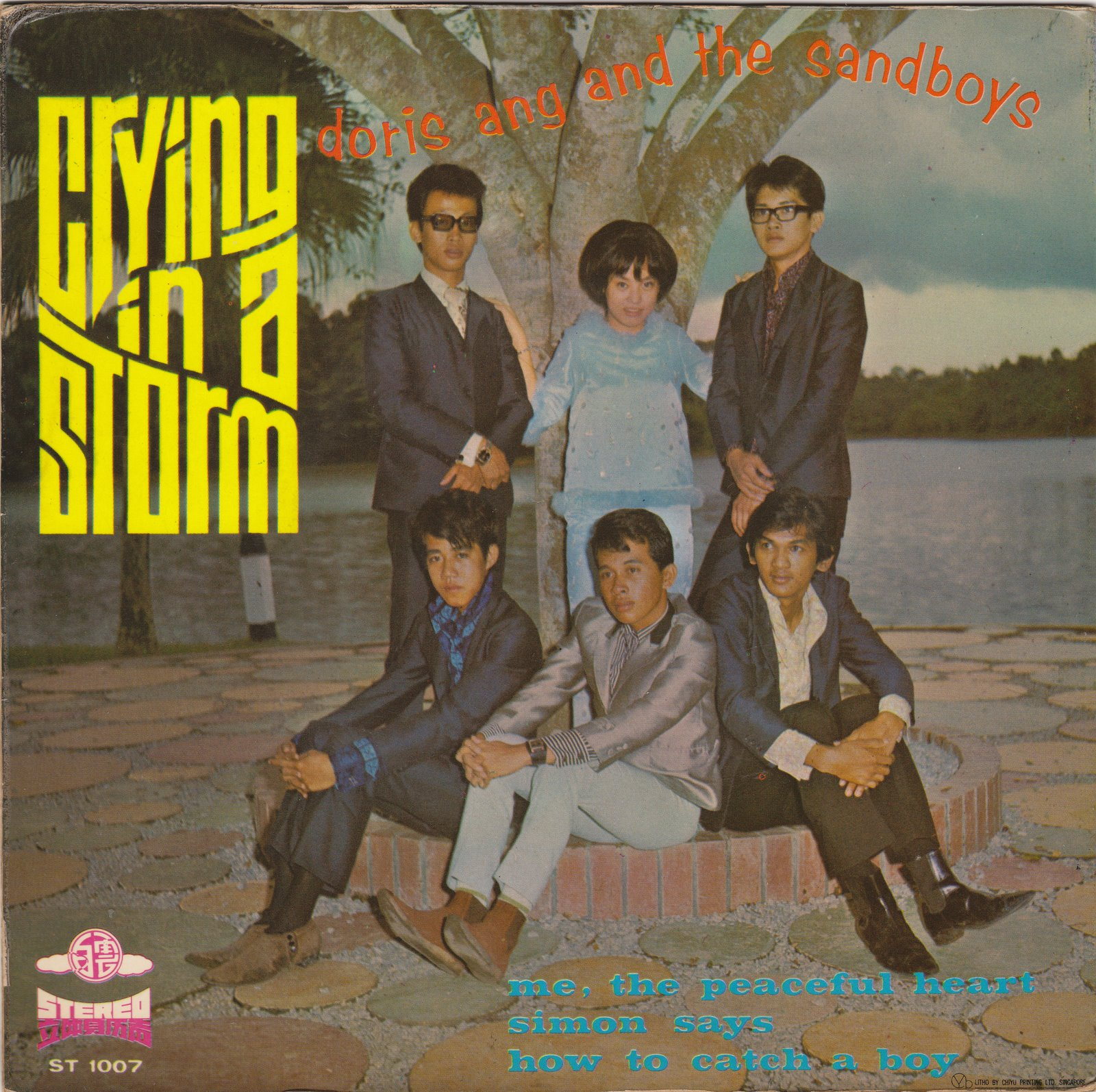
Doris Ang and the Sandboys, 
recording artistes, Irene's good friends.

Connect with them:

So how did I end up in the music business, you  might ask. Well, it all started at a musician’s home somewhere along  River Valley Road  when I watched my best friend, Doris Ang (Hong Pei Pei),  rehearsing with the band, The Sandboys (image), for their upcoming record.  After the session, they asked me to sing a song.  So I sang a song  popularised by Rita Chao, I think, Say Yes, My Boy or Sixteen Candles. Rita and Sakura were the singing sensations of the period.


Mr Heng Ser Piah, the White Cloud Record Company boss, happened to be present. He was impressed and offered me a record deal at the tender age of 12. I was still in school and of course had to obtain my mother’s consent. Mr Heng sent me for vocal training with Ms Leung Pin, a famous singing coach, for several months. She taught me proper Chinese pronunciation and I still remember practising how to say “'por poh moh foh” .


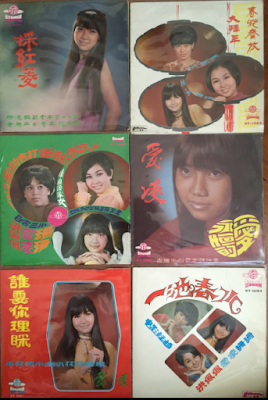
Eventually I recorded 10 albums under The White Cloud label -  7 EPs and 3 LPs with other artistes – all in Mandarin. 


Another recollection was when I made an appearance in The Chinese Variety show, a popular programme on Radio Television Singapore (RTS), now known as Mediacorp.  I only needed to mime in front of the camera as my recorded song was played in the background.


NB: Irene has a brother who is a leader with LOCOMOTION, one of the best dance bands in Singapore and a brother who was a journalist and writer, Sonny Yap.

Andy, blogger, with Irene Yap and the late dancer,
Sunny Low, @ Tan Soo Khoon's CNY dinner, 2019.

The memorable pieces of messages Irene receives
from the patrons when she is singing on stage.

[Click Irene Yap under 'Labels' below and read
about her recording career singing Chinese melodies.]

Images and article have been COPYRIGHTED by Irene Yap and selected for a book to be published.

Saturday, September 17, 2022

Walter Chee From Zircon Lounge played @ National Stadium With Heritage, Sweet Charity, Speedway, Gingerbread, Tokyo Square...

Walter Chee

UP TO 800 VIEWS, 25 COMMENTS

This article is worth the read. If you don't, you're missing the point! Again, many thanks Wen Hing.

Walter Chee – The Underrated Guitar Maestro

By Chow Wen Hing.


I first came to know about Walter when I saw his Facebook postings. He had come across as a sociable kind of person – but then we can’t really tell these things from social media. And it turned out I was not too wrong. He is a friendly, cheerful and unassuming man; and one could have easily mistaken his gentle demeanor as a trait of his profession being a guitar technician or a luthier. 


I was not active in the ‘music circle’ (if ever there’s such a thing). This is the network of musicians, performers (some famous, some trying), music hobbyists, and even veteran from Singapore’s nascent music industry. Thus, getting to know Walter was like being inducted into this indiscernible circle, and I had been curious about this gentle man’s thoughts and motivation. 


I have a chance to satisfy my curiosity when I visited Walter in his shop with Andy one day. I guess you can say Walter’s persona has sparked Andy’s curiosity too, and Andy of course tasked me to do an article on this mysterious man for his blog. I resisted for a while, but my friendship with both men got the better of me. In the interest of time (and as I am not really a reporter), I’d gotten Walter to agree to share his thoughts via a question-and-answer format.


I had expected to do quite a bit of editing to his responses – but alas! I was proven wrong! Walter writes flawlessly, and very minimal (if any at all) correction or editing was required. So reproduced in full here is the Q&A, which I hope readers would feel the same sense of enlightenment as I did on reading his responses. Oh yes, please do stay for my closing comments after it you have finished the Q&A though… 😊


'Strike Back' - YouTube
An original Singapore pop music piece,
composed and performed by Walter Chee
from River Tree Music.

Q&A


1. Tell us about your growing up years and the first time you began playing an instrument - was the guitar your first choice?


Growing up in the 60s was simple and with less distractions as compared to the world today. At a young age, we learn to socialise and make (real) friends with neighbours to play and learn together. As kids, we had little. No fancy toys to play therefore we invented our own games and set the rules of the game. Bedtime was usually before 10pm because playtime ended when the sun set. Black and white TV did not arrive until the beginning 60s.

Back in those days, a lot of older boys either joined gangs or played the guitar. These older boys and hippies would usually gather in the evening to sing and play the guitar, and I would be their most ardent audience. I developed an interest for the instrument and learned to play the guitar from one of the boys when I was in primary school.

2. You were with Chris Ho and his band Zircon Lounge. How long were you with the band? Can you share a significant moment during this period of time?

I started forming bands when I was in secondary school. My first serious band was called Stolen Property when I was 16. We played mostly rock songs and also did some originals. In 1984 we joined the Yamaha Combo Competition and came in first in the competition. Even though we won the competition, gigs were scarce and there were very few opportunities to perform in those days. The only chance to get our music heard was to join band competitions. Hence, we decided to join another band competition organised by one of the most popular lounges in Singapore at that time called Rainbow Lounge.  In the finals of the competition, Chris Ho was one of the judges and that was how I met him.

We did not connect until much later when Chris was looking for a second guitarist for his band to promote his new album. He asked me if I was interested and of course I said yes! I remembered Chris as a serious singer/songwriter who gave me space to express my creativity in his music. I really missed his voice on the radio. My most significant moment with Zircon Lounge was when the band was invited to play in the National Stadium for the “Police and Friends” concert. All the top bands at the time were invited – Heritage, Sweet Charity, Speedway, Gingerbread, Tokyo Square, etc; and of course, Zircon Lounge. Unfortunately, I do not have a photograph of such a big show to remind me of that glorious day. I am certain photographs were taken and I really hope I could get a hold of one as a keepsake.

3. What was it like to be a “band boy” at that age, and what were your thoughts on the music scene back then (the 80s/90s)?


I think the word “band boy” is synonymous with working musician in clubs or lounges. It cannot be use to describe me because I never played professionally or regularly. I played mostly concerts and one-off club gigs. I guess I was more of a boy-in-a-band back in the 80s. The real band boys back in those days enjoyed a rather glamorous life and had more “star” status than the current gigging musicians because they are closest to the “real” thing. In the 80s, Singaporeans were starved of being treated to international acts. 


Many world-famous bands back then were either banned from performing here because of their image, or our market was simply too small for them to do a show here. It was impossible to even catch a video on TV of such acts. But these days, you can watch and enjoy almost any band that ever existed on YouTube and on the MTV channel. Local bands playing the popular songs of the day provided the relief and bridged the gap to the real thing. There was a demand for them because the audiences were hungry for Western pop, and that I feel is one reason why many of the good local cover bands achieved star statuses.

4. You went into the corporate world after that. What made you “hang up your strings”?

I had a lot of momentum, musically and as a guitar player, in the 80s. After Stolen Property and Zircon Lounge, I joined a jazz-rock-fusion band called Fabby Dabby. We also did mostly concerts and one-off club gigs. I entered National Service (NS) in late 80s and that put almost everything to a halt temporary. After a year in the army, I started gigging again on my day-off with Fabby Dabby. However there came a time when the rest of Fabby Dabby wanted to be band-boy and it was then that we disbanded.

After completion of my NS and having failed to convince my parent to let me pursue a career in music, I left for England to pursue my Bachelor of Engineering. While in England, I also took up apprenticeship as a guitar tech in an instrument workshop in London. Upon my return to Singapore, I worked for 27 years in a corporate environment. However, during this period, I did not actually “hang up my guitar”. I played in bands whenever there was an opportunity but mostly as a serious hobby. I also did gigs and collaborated as an arranger and producer for a British singer/songwriter.

I did not take up music as my career mainly because one needs to be extraordinary in order to be successful in this industry. In most industries, you can be mediocre and still be successful if you sway where the wind blows but not in the music industry. I do not think I am extraordinary hence I decided it is better for me to take music as a serious hobby and not as my career with my livelihood depending on it.


5. Did the years away from being active in the music scene dampen or fire up your desire and passion about music?

I think it occurs to most musicians or serious hobbyists, that despite being busy for years with other real-world stuff and having neglected your instrument for years; you never really forget what really fires you up. I can imagine how many would still be turned on by that power chord blasting from a Marshall stack. For these people, myself included; all it takes is a nudge to spark off a blaze. A chance meeting with your ex-drummer or keyboardist, meeting like-minded individuals who are also tired of the rat race – all these are the little sparks that can get me fired up and I’ll be inspired to start making music again. The desire, that teenage dream, and the experience of playing in front of twenty thousand people in an arena never left me. But sadly, I know it might not happen again for me in this lifetime.

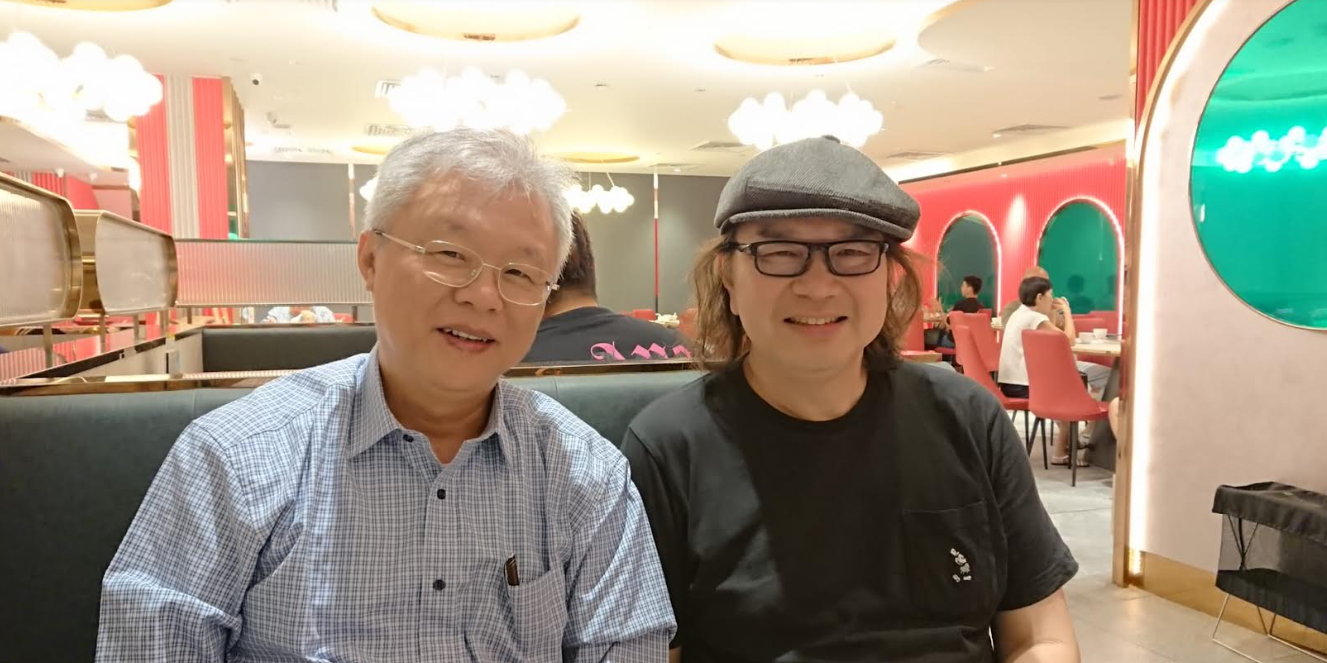
Author Chow Wen Hing [left] and Walter Chee.

6. What do you think of the new generation of musicians in Singapore now and how do you think they are faring as compared to musicians during your time?

I think every generation of musicians will find the next generation lacking – perhaps musically or emotionally. They will find them ‘soul-less’ and ‘not like our generation’. For any genre of music, we tend to go “so far” into the new generation and say to ourselves "enough it’s enough, this is as far as I can go” – we’ll stick to what we love and are familiar with. Similarly, the new generation of musicians will always feel that they are better than the last, being more connected and ‘real’. I tend to agree that with the power and use of technology, music of the current era is technically superior.

In my opinion, local musicians who grew up before YouTube came along had it easy because there was no comparison to the real-thing. If you can somehow sound like the real-thing, you will be admired. Usually, exact note-for-note replication could not be achieved so we learned to improvise and developed our own style of playing. This in my opinion is a good thing. New gen musicians are caught up in what YouTube and the new technologies can offer. Now playing the exact notes and emulating the style almost in perfection is possible. 


There are tons of YouTube tutorials and lessons to guide budding musicians with the skill and technique development. Free software is available to be downloaded, which can help slow down the music and allow complicated licks to be analysed and learned. Specialised amps and hardware are also on sale which can do the same. They play fast and are very technical in their playing. The key difference is that these technically competent musicians are not as creative, and many of them are not able to improvise. This is a very important in musicianship and developing a musical character.

7. Is a career in the arts - in music in Singapore in particular, a viable option, or is it still an uphill task today?

Music as a career is an uphill task anywhere in the world. One of the reasons why music took a backseat for me after I came back from England was that I have seen too many “nobody” buskers. There were – as I believe still are today, many street buskers who were talented and were so good that they could have stood shoulder to shoulder with any big names in the industry. Why aren’t these people “discovered” and placed “up there”? For me there were too many questions and very few answers.

If music as a career in England and Europe is bad, music as a career in Singapore for 99.999% of the people will be suicidal if you do English originals. Music as a career in Singapore is still viable only in the classrooms and not on the big stage in front of twenty thousand people in a big arena.

8. What in your opinion do you think the music industry in Singapore needs, for it to gain more traction and some semblance of a feasible career choice and become a fully contributing profession in our economy?

We need heroes and a miracle in the music industry in Singapore. We need heroes en masse – from people who have made a name for themselves on the world stage. Everyone loves a hero and hopefully these heroes will inspire and motivate more people to stand up if they have the talent to one day become a hero. But bear in mind that it will be an uphill task. A good example would be how some years back, when a well-known religious leader threw millions into Hollywood to promote a lady singer but it all came to naught. Throwing money at it is not the answer. 


We need a miracle in a national language, where we can write songs with and where it is also accepted and welcomed in the region and the world. Look at the Thais, the Koreans, the Indonesians, and the Japanese music industries. Besides the size of their markets, they have a language that is unique and accepted. Hopefully one day, just like K-pop that has now broken into the world market, we have our S-Pop.


Until then, I guess we must keep trying and keep our dreams alive. Perhaps one day, someone truly extraordinary will appear, and as our pop hero, will spark a nationwide movement that will make a career in music in Singapore a reality. 🙥

Walter Chee, luthier in his shop.

Closing Comments


A real bitter pill to swallow, but swallow it we must. Sobering words from someone who’d been there, seen it, done it; and certainly, are words we must allow to ricochet off the walls of the ‘circle’.  I would also like add a comment that “Singapore musicians are simply too lazy”, made by another veteran within the circle. 


And as I ruminated over these words, I surmised that we need:


  1. Hard work

  2. A hero (a leader)

  3. A miracle (on the surface, but frantic real-world activity beneath)

  4. Buy-in on a national level – first


Sounds like another Monday to me. 


For if this is not what Singapore is known for, I don’t know what is. We can make miracles happen – Singapore itself is a miracle, many say. So, with due respect and deference to Walter and all the veterans out there – we are in the right era. This is the time for Singapore music (S-Pop, S-Rock, Lion Rock, etc.) to happen. We have the infrastructure, the assets, the desire, the energy, the purpose and drive, and the reason to make it happen. As I am writing these words now – it is happening. 


What veterans (in and outside of the circle) can do is to add your voice to this movement. Support a local act. Buy a locally created and produced piece of musical work. Sign up for a Spotify account and create a playlist only of Singapore original music and songs (if you do not know how to do this – ask a younger Singapore musician). Attend shows and gigs of local bands. Make friends with them. See in them the you when you first started and see the struggles they have as the ones you had. See the fire and dreams they have as the ones you’ve had before. Don’t let that fire in you go out – not yet. Pass the spark along. Support a Singapore song.


Thank you Walter, for sharing your thoughts and experience on this journey. You are in the hearts and minds of many of us – a hero in your own rights. Your story has added another foundational layer onto which our younger musicians can build on. And of course, they can continue to seek your advice by visiting you at RiverTree Music 😊


=@=


From left: Musicians Walter Chee and his group 
with Andy n Wen Hing [author of this posting.]