Showing posts with label Zhang Xiao Ying. Show all posts

Friday, August 24, 2012

Searching For My Favourite Chinese Oldies: Yao Li - 那個不多情 姚莉

UP TO 45,000 VIEWS, 
40 CHATS, COMMENTS


Yao Li has passed away on 19 July 2019 from The Malay Mail.

Chinese Mandarin oldies: 那個不多情 姚莉 (Yao Li). 
YouTube: by sydneylam19

Songs I Love

If it weren't for the magic of the computer, Google and YouTube I would never have been able to retrieve or even listened to the Chinese oldies by the great prewar songstress Yao Li.  In fact, I didn't even know the singer's name nor the song title.  There was an evening I googled, Chinese Mandarin Oldies found the above video and recognised the melody immediately. Memories of my childhood flooded my data bank.

PYE Radio 1950s in our living room shophouse.


These songs were my mother's favourites and I used to listen to them in the 50s when she tuned in to some Chinese programmes from the radio. I am not sure if they were from our own stations or from overseas but the family's PYE radio certainly took us to places unknown and songs so beautiful. 

Today I wish to share these songs especially with those who are not familiar with Mandarin songs from the 1940s. But first... the singer.

Yao Li or Yáo Xiùyún (姚秀雲) was raised in Shanghai and rose to popularity singing in one of the city's dance halls.  She had her songs broadcasted over the radio in 1935 at aged 13 and recorded her first single with Pathe Records at 14 with Yan Hua (嚴華) called Xin xiao fang niu (新小放牛) or the new cowherd. 

She also often recorded as a duo with her pop singer brother. At that time she became a rival of Zhou Xuan, and was called Silver Voice as opposed to Zhou Xuan's Golden Voice (check Labels below).  Yao Li's success in Shanghai was partially due to the vocal training of the Russian diaspora court musicians. 
In the 1940s,  she was encouraged to imitate Afro-American singers seen in Hollywood movies.  These movies were available in Shanghai. Her voice improved tremendously and in the 50s she developed a singing style like her idol Patti Page.

Because she got married and had family Yao Li halted her career in 1947. Following the Communist power seizure in China in 1949, popular music was banned and Yao fled to Hong Kong in 1950. She continued singing and recording as these became hits.   Within five years she made the popular 桃花江 (Peach Blossom River) as her singing voice was used in films to dub those of famous Chinese actresses.  Soon the featured songs became hits for Yao Li too. 

In 1967  she halted her singing career and within two years acquired a position as an executive with EMI Music Hong Kong.  She returned to performing in Taiwan from 1970 and retired in 1975.

The above song on YouTube is one that I listen to very often and the melody never strays from my mind.  Roughly translated this song, (姚莉 -那個不多情 姚莉) means, That's Not Sentimental.  Ironical. Another favourite of mine is  The Spring Breeze Kisses My Face (姚莉 - 春風吻上我的臉) recorded in 1956.

There are still many other Chinese melodies swimming in my mind and if I find them I shall share them on this blog. 

Check Richard Rajoo and Yao Li. Connect below:

Edited information from Wikipedia and whatsinmyipodblogspot. 

Certain information about Yao Li may not be accurate and I stand corrected.

19 July 2019

She passed away in Kuala Lumpur, Malaysia and has given a performance in 2012. May she Rest In Peace.

Images: Google.

Monday, February 13, 2012

Valentine's Day 2017: Singapore 60's Love Songs


Above types of vinyl were selected because of sleeve covers. Videos vary.

Whether it's in English, Chinese, Malay, Tamil or any other language the love message is clear. With or without Valentine's Day, writing songs with romantic themes has been the mainstay for many a lyricist or composer in our pop music world. Similarly on our little island.

Robert Suriya, the Fitzgerald brothers, Shirley Nair, Fu Su Yin, Yusnor Ef, Kassim Masdor and many others have written love songs that have become hits here in Singapore. Adrian C. Tills, an expatriate who was in Singapore in the 60s, composed quite a number for local consumption.
                      kt jong video: Love Is Blue: Heather w Thunderbirds

Sleeve Cover 1
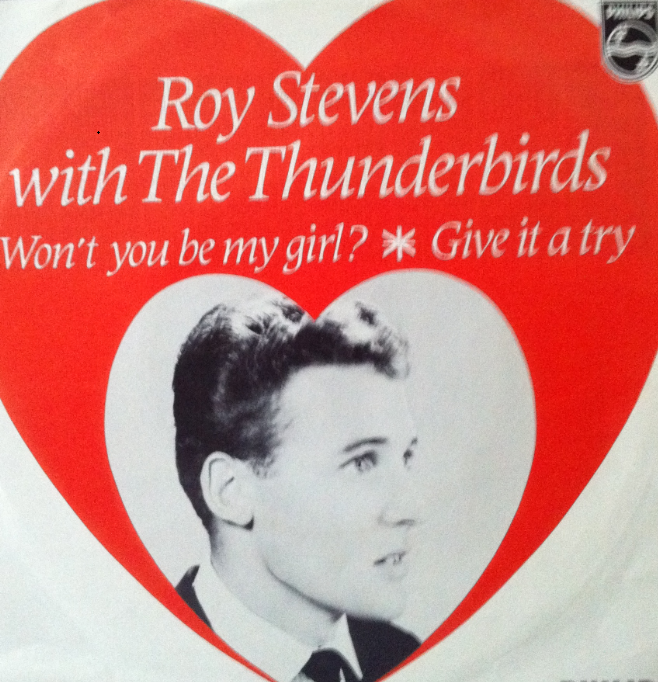
Two of them were released on a single by Philips and sung by Roy Stevens with The Thunderbirds' accompaniment. The first song, Won't You Be My Girl pleads, "I know you're the idol of other boys too, But none of them loves you as much as I do, So please, please baby won't you be my girl?"

The flip side encourages the lover to Give It A Try because, "There's so much pleasure in Lovin, Lovin is a sheer delight, So love me, and you'll see, Everything I say is right..." Mushy? Not so for listeners in the 60s.

Sleeve Cover 2 
Cecilia Lim, popular with Chinese fans, covers four romantic hits in English from the 50s and 60s under VOC Records with, Please Help Me I'm Falling, Harbour Lights You Belong To Me and the irresistible, To Sir With Love echoing every schoolgirl crush with the lament, "If you wanted the moon I will try to make a start but I would rather you let me give my heart..." I am sure you are familiar with the other 3 love songs that have become international hits.
                   biskutkerin video: Jeffridin n The Siglap Five - Kasihku Pergi

Sleeve Cover 3 
This one is a Malay Extended Play, with dashing good-looker Jeffridin and his Siglap Five, recording 4 songs. One of them is about a lad who was abandoned by his girl and Kekaseh Ku Pergi (My Love Has Gone: by local composer Mohd. Ali) describes his bitterness, "Kini aku hidup sepi, hingga aku menanti..." (I live in loneliness and am still waiting...).

Another track composed by Jeffridin himself, relates his Termenong (Day Dreaming) woes while the third song, composed by A. Karim, tells of a particularly spoilt girl-friend or Gadis Manja who has stolen the singer's heart.

A point to note here. These Malay melodies are love songs and unlikely produced for the specific purpose of celebrating Valentine. It is just a coincidence that they are about love; in fact, many songs from the 60's have similar themes.

Sleeve Cover 4:
The romanticism in Chinese songs has the proclivity to be too sentimental and sugary for the western crowd but one of pop 60's Chinese singer, Zhang Xiao Ying's EP has managed to deal with the subject wisely.

The vinyl has songs that repeats a theme. The title track, He Who Knows My Heart (Zhi Xin De Ren) tells of a lover who reminisces her soul-mate. The EP has three other tracks. Hen Bu Xiang Feng Wei Jia Shi (Bitter Sweet Memories As I Wed) is about a girl who still yearns for her previous boyfriend although she is married. Ghastly!
                           eosyeo video: Chang Xiao Ying 張小英 - 我爱你一万倍

She Mo Hua Wei Ni Kai (What Flower Blooms/Opens For You) could have sensual connotation. Surprise, surprise. And the final track Wo Ai Jun Lai Jun Ai Wo ( Loving You, Loving Me ) accentuates the flavour of the day again.

You won't be googling for most of these songs would you? Might spoil your day. Valentine ones are just supposed to say, I love you and I want you. No heartaches, ever! Or so you think.

Happy Valentine everyone.

Chinese vinyl translation by: LKM and SM. Thank you both.

Images/original article: Andy Lim Collection.

Thursday, September 17, 2009

Zhang Xiao Ying Promotes Denon Stereophonic

It is quite obvious that this back cover of Zhang Xiao Ying's Prinstar EP vinyl is promoting the 60's Denon stereophonic record player, popular among the general public who cannot afford expensive European, British or American sets.

The stereo set consists of a record player, a radio/tuner/amplifier and a pair of simple speakers. In this typical 45 rpm Chinese recording made in Singapore, Zhang Xiao Ying is accompanied by a well-known guitar group called The Travellers although the songs are not part of the promotional package as offered by other advertisements on vinyls.

Vinyl covers were used as a means of promoting products because back in the 60s a popular singer could generate at least 10,000 copies of an Extended Play record. Each EP sells for less than US$4.00, an affordable price for any teenager or person in the street. 

Usually the company advertising the product paid for the production of the sleeve, saving the music company some money from its total budget.

Image/original article: Andy Lim Collection

Monday, June 29, 2009

Zhang Xiao Ying - CantoPop JPop Tokyo Square


Since Canto-pop became the buzz word in Singapore, Zhang Xiao Ying had also pressed several albums in Cantonese. But sales were slow and because of strong market competition and lacking proper promotion in Hong Kong, the business was curtailed by her record company.


She continued with Mandarin pops but also recorded oldies from the 50s and 60s. When she recorded melodies for the Spring festival, they sold just as well, like Chinese New Year goodies. According to 3 Dream Blogspot, "Her voice injected the spirit of splendour and goodness for each New Year."

Zhang Xiao Ying also translated Canto-Pop, J-Pop and Tokyo Square's Within You Remain into Mandarin. She was the first Chinese singer to have a special TV programme dedicated in her name. It was screened on Channel 8 under the TCS (Television Corporation of Singapore) banner.


Image/Article: Andy Lim Collection.

Zhang Xiao Ying (张小英) Chinese 60's Music


UP TO 25,000 VIEWS  
22 CHATS, COMMENTS

A Singaporean but of Shanghai parentage, she came into prominence when she won the Rediffusion Talentime singing contest in the late 60's. 

She was signed up for a recording contract immediately and a song, Three Dreams, was specially written for her first new album. Soon Zhang Xiao Ying became a household name.

Since A-Go-Go music was popular during that period, she signed up with Golden Urn Records and produced some. She became very much in demand.

In the beginning, she was accompanied by the instrumental group, The Travellers but was later backed by The Stylers who were more popular in the region then.
Singing Lover's Tears in Bahasa Indonesia.

When she came under Denon's Prinstar Records the promotion of her latest pressing would be broadcast on Rediffusion weekly. She is known to sing her songs clearly, with perfect diction, energy and feeling.

Some of her fans did not realise she could sing just as well in the Indonesian language. Again her pronunciation and ability to speak the language proved a hit with those who loved to hear her (video above).

In the early 70's, when black and white TV was popular, RTS - Radio Television Singapore - had a programme called Hua Yuen Liang Xiao (梁萧华) hosted by famous comedians Wang Sar and Ye Fung. Scheduled on Friday evenings, Zhang Xiao Ying appeared every third Friday dishing out her latest hits.

Many Singaporeans who were familiar with Mandarin rushed home from work and waited in their sitting rooms for her to come on screen. It has been known that her programmes also drew hundreds to the Community Centres where many television sets were placed for the general public who did not own one at home.

The magic of today's media has brought us back to the 60's again. And because of the flexibility of You Tube and the internet, Ms Chang is again with us. 

Enjoy.

One of the most pop Chinese New Year song by Zhang Xiao Ying (张小) that came out in the 70's. The title Ta Di Hui Chun (大地回春) means the welcoming of spring in the big land which refers to the homeland (China).
Zhang Xiaoying (Chang Siao Ying) - 
Dare Not Tell You 不敢告诉你-张小英 1970s


Image/Article: Andy Lim Collection.