Showing posts with label Good Friday. Show all posts

Thursday, April 02, 2026

Reflection for Good Friday 2026: 'Man's Search for Meaning' n 'Silence'. By Phil Chan


Dear Andrew,

Good morning. Below is my reflection for this year’s Good Friday 2026. Wishing you and your family a Good Friday. 

Best Regards. God Bless You.

Phil.

"Man’s Search for Meaning" and "Silence":

As the traditional Good Friday and Easter approach, we are reminded of the horrific sufferings and death of Jesus. This Lent season reminds us of two bestsellers and powerful classics: Viktor Frankl’s (reprinted 2014) bestseller, "Man’s Search for Meaning" (1959) and "Silence" (1969) by Shusaku Endo (translated to English by William Johnston, 1925-2010). Viktor Frankl was a well-known lecturer at Harvard and Stanford while Shusaku was a graduate from University of Keio, Tokyo (n1949) and University of Lyon, France (1953). Shusaku won many outstanding Japanese literary awards.

The two books in mention.

Both books paint a vivid picture about human suffering. Viktor shows us the meaning of life in suffering in a Nazi death camp while Shusaku shows us a different type of suffering which will be discussed below.

“Silence" is a Japanese novel about a Jesuit priest named Sebastiao Rodriguez who made a missionary trip to Japan to find his mentor in order to rescue him from persecution by the Japanese ruling class. When he got there, he discovered that peasants were “tortured” so as to break their Christian faith. Eventually Sebastiao was dragged by the ruling class to the crossroads for his soul. They put the artist image of Jesus Christ, the Messiah before him and told him to step on it and denounce his faith. 

Sebastiao was told that the torturing of the peasants would stop if he stepped on the image. However, the torturing would persist should he fail to follow their instruction.  For Sebastiao, it was a dilemma. To step on the “picture” of God felt like he was betraying the Messiah. But to refuse, he also felt like he was betraying love and compassion for the Japanese peasants. At that moment, the Silence of God book reached its climax.  Sebastiao finally heard Christ, the Messiah speak. “It was to be trampled on by men that I was born into this world.  Step on me.  I carry the cross for this very reason.  To bear the weight of your shame.”

‘O Sacred Head Now Wounded’ - Fernando Ortega. YouTube Video by Scott Bacher.

https://www.youtube.com/watch?v=UgkVTtT-0xg

The above episode is similar to Viktor’s 2017 classic, “Man’s Search for Meaning” where prisoners in holocaust camps were mistreated by the Nazis. God seemed to be silent and hidden as the inmates underwent torture and sufferings. It is so aptly described by Isaiah, Truly, you are a God who hides himself, O God of Israel, the Savior. Isaiah 45:15.

Indeed, the Messiah did not come to condemn us; He came to be condemned for us. In the Gospels, He did not once ask to be worshipped. He did not come for accolades, crowns or recognition. He came to be crushed so that we could live. He came to show us the path of suffering which leads to freedom. 

The book convicts me because of this truth: Too many of us Christians, worship dogma, preachers, spiritual methods or even the religious book itself. But Christ never once commanded the worship. People worshipped Him but what He asked was far harder.  

Follow me. Walk my path. Carry my cross. Enter the darkness. And in so doing, you will find life. Because salvation is not found in avoiding pain. It is found in pressing through it i.e. taking up our own crosses. In enduring shame, the loss and the breaking, one will discover that one has been transformed. We will also discover that the kingdom of God is always within us.  In Luke 17:21, Jesus said “… nor will people say, ‘Here it is,’ or ‘There it is, ‘because of the kingdom of God is within you.’”


https://www.youtube.com/watch?v=D5DyeCx8H4U

Sebastiao thought that stepping on the image was betrayal but in reality, it was the profoundest act of following Jesus.  Christ is not fragile and the Messiah does not need us to protect Him. Christ came to be crushed under the weight of the world's sin yet pronouncing, “I will set you free”.  

This is the mission of Christ, the Messiah - to set us free. Free from dogma. Free from tyranny. Free from the victim mindset. Free from our own chains. Through the Bible, He shows us The Way i.e. not by escaping suffering, but by being transformed. This is not just theology. It is the most powerful truth one can live by.  St. Paul said in Romans 12:2 … “but be transformed by the renewing of your mind.” Then you will be able to test and approve what God’s will is, His good, pleasing and perfect will.

Book Summary:

Both "Man's Search for Meaning" and "Silence" reflect on human suffering. It shows suffering as a place of testing, hidden grace, and deeper spiritual insight. In "Silence", Sebastian's renunciation highlights the tension between faith, compassion, and sacrifice. The book argues that Christ is present in suffering, and that true discipleship means following Him through pain, shame, and transformation. Christian faith is not about avoiding suffering but enduring it with Jesus the Messiah. Salvation is found not in pride or outward religion but in self-denial, compassion, and trust in God's hidden presence.

YouTube Video by: 7pm Choir. Catholic n Christian Choral 

Music.


https://www.youtube.com/watch?v=AQVog92kLH8

Finally, there is Hope in suffering. Jesus said Let not your heart be troubled: Ye believe in God, believe also in me.” (John 14:1) 

Good News at Jesus’ Tomb:

1) The Mysterious Napkin for Jesus’ face.

John 20:6-7 

Then Simon Peter, who was behind him, arrived and went into the tomb. He saw the strips of linen lying there, as well as the burial cloth that had been around Jesus' head. The cloth was folded up by itself, separate from the linen. Do we fold our napkins in a restaurant to signal to the waiter that we are returning to the table after we excuse ourselves for a while? Perhaps through the folded napkin, Jesus’s return was made known.

2) Mary called Jesus the Gardener, at the tomb.

John 20:14-16 

"They have taken my Lord away," she said, "and I don't know where they have put him." At this, she turned around and saw Jesus standing there, but she did not realize that it was Jesus. 

"Woman," he said, "why are you crying? Who is it you are looking for?" 

Thinking He was the gardener, she said, "Sir, if you have carried Him away, tell me where you have put Him, and I will get Him." 

Jesus said to her, "Mary."

She turned toward Him and cried out in Aramaic, "Rabboni!" (which means Teacher). 

Interestingly, in the Garden of Eden, God’s first instruction to Adam is to be a gardener., to work and take care of the garden (Genesis 2:15). However, Adam failed. In contrast, Jesus, the second Adam, came to restore man’s fallen state.

3) Jesus has resurrected and we too will have eternal life.

This is not surprising. As the Messiah is sinless, his body did not decay. In fact, Jesus has resurrected. Contrarily, we humans are sinners and subject to bodily decay after death. 

Romans 3:23 … “for all have sinned and fall short of the glory of God.”

Romans 6:23 “For the wages of sin is death, but the gift of God is eternal life in Christ Jesus our Lord.”

We thank God we have the hope of resurrection … to be reunited with our loved ones who have gone before us.

Comments are always welcome.

Author: Dr. Phil Chan.

'Oh Sacred Head, Now Wounded' (Hymn 271) - Hymnology (Official Video)  Video by: Hymns of Grace.

Dr. Phil Chan
Given the short time Phil wrote this article, it is a miracle! Just shows his dedication and spirit. Again, thanks so much my dear friend.

Images: 
From YouTube: 'Good Friday Hymns' - Rosemary Siemens for picture of the Cross.

Friday, April 18, 2025

A Good Friday and Easter Reflection 2025: By Phil Chan.


UP TO 1,100 VIEWS

A Good Friday and Easter Reflection 2025.

Dear Andrew, Thank you for inviting me to write for your music blog again. 

Reply: Again my appreciation to a good friend for the short time given him, two days, to write this exceptionally informative piece. He doesn't prepare much; it's all there in his memory. Thanks again Phil.

The Triumphal Entry of Jesus to Jerusalem:

John 12:12-13 : "The next day the great crowd that had come for the Feast heard that Jesus was on his way to Jerusalem. They took palm branches and went out to meet him, shouting: 'Hosanna! Blessed is he who comes in the name of the Lord! Blessed is the King of Israel!' " [above image]

Where did the waving of Palm branches originate from ?

The last Biblical prophet Malachi delivered his prophecies around 430 BC. After this, there was a period of silence (i.e. no new prophetic messages from God were given) until the time of John the Baptist who baptised Jesus. During this period, a violent Maccabean revolt against the Seleucid Empire took place around 167 BC. The Maccabees and victory eventually led to the re-dedication of the Temple in the old city of Jerusalem. It is here where palm branches were first used to celebrate this triumphant victory over the Seleucids. 

The Maccabean victory celebration also commemorates the eight-day Jewish festival of Hanukkah, also known as the Festival of Lights. Interestingly, during this first celebration, the people who served in the temple found only enough oil to light the menorah for one day, but it miraculously burned for eight days. This is a well-known account. Originally, menorahs only had seven branches. After the miraculous incident, Jewish menorahs [image] are now made with nine branches, instead of seven.

The triumphant entry of Jesus into Jerusalem, with crowds waving palm branches, is reminiscent of the Maccabean victory celebration. In Jesus’ case, the crowd mistakenly thought that Jesus had come to liberate them from the cruel Roman regime. That was why the crowd shouted Hosanna, which means “to save us” in Hebrew.

'O Sacred Head Now Wounded' - Fernando Ortega.
YouTube Video by: Scott Bacher.


Jesus on a colt entering into Jerusalem:

But Jesus did not come as a mighty warrior to overthrow the Romans. Jesus rode on a donkey’s colt into Jerusalem instead of a horse (for a warrior). A colt is a male donkey under four years old. Donkeys are equestrian animals like horses. One needs to train the young donkey first before putting a saddle on its back and letting anyone ride on it safely. It seems the initial training involves using a blanket like a covering for the back of the colt so that eventually, the colt will get used to the saddle.

Luke 19:29-31: As he approached Bethphage and Bethany at the hill called the Mount of Olives, he sent two of his disciples, saying to them, "Go to the village ahead of you, and as you enter it, you will find a colt tied there, which no one has ever ridden. Untie it and bring it here. If anyone asks you, 'Why are you untying it?' tell him, 'The Lord needs it.' "

Amazingly, Jesus rode on colt that no one had ever ridden before in the midst of a hysterical crowd as He entered Jerusalem. Somehow the colt was not startled. Perhaps this in itself is a miracle! Jesus came to bring peace and save, giving mankind a means to enter the Kingdom of God.

This episode was prophesied in Zechariah 9:9, "Rejoice greatly, O Daughter of Zion! Shout, Daughter of Jerusalem! See, your king comes to you, righteous and having salvation, gentle and riding on a donkey, on a colt, the foal of a donkey."

In the Old Testaments, Moses, King David, King Solomon, Abraham (though not explicitly) and prophets rode on donkeys too.

Special Provision for Donkeys:

Deuteronomy 5:13-14 : 

"Six days you shall labor and do all your work, but the seventh day is a Sabbath to the LORD your God. On it you shall not do any work, neither you, nor your son or daughter, nor your manservant or maidservant, nor your ox, your donkey or any of your animals, nor the alien within your gates, so that your manservant and maidservant may rest, as you do."

Donkeys may be stubborn but are dependable. The colt is given this honorable duty to carry our Lord Jesus Christ Himself. Interestingly, sheep is not suitable for this heavy work and it is not mentioned above that sheep need Sabbath rest. More details about the donkey’s role in the story of the Good Samaritan can be found in a previous 2021 Easter Reflection:

Reflections On Easter - 2021 - Phil Chan:

https://singapore60smusic.blogspot.com/2021/12/christmas-message-away-in-manger-jesus.html

Jesus Paid it All - Fernando Ortega - Lyrics
YouTube Video by: StrangeLyrics


Some spiritual thoughts for this Easter meditation:

Issachar was the fifth son of Jacob born to the unloved wife Leah. It is interesting to note how Jacob blessed Issachar and his sons as quiet dependable donkeys with understanding.

Perhaps we could meditate on the following verses this season.

Gen 49:11, "He ties his foal to the vine, And his donkey's colt to the choice vine; He washes his garments in wine, And his robes in the blood of grapes."

Gen 49:14-15, "Issachar is a strong donkey, Lying down between the sheepfolds. When he saw that a resting place was good. And that the land was pleasant, He bowed his shoulder to bear burdens, And became a slave at forced labor."

1 Chronicles 12:32 : "Of the sons of Issachar, men who understood the times, with knowledge of what Israel should do, their chiefs were two hundred; and all their kinsmen were at their command."

Three Days | Easter Hymn | Easter Song of Resurrection |
 Choir w/Lyrics | Sunday 7pm Choir
YouTube Video by: Catholic and Christian Choral Music.

Though Issachar did not emerge as a leader with high ambitions like some of the other illustrious brothers such as Joseph or Judah, he did receive positive blessings from his father Jacob. Issachar’s tribe is hardworking, diligent and contented workers who enjoy taking take time off to appreciate the land allocated to them. Issachar’s sons are known to be wise men.

Author: Associate Prof., Phil Chan [Dr.]


Thursday, April 17, 2025

Maundy Thursday, Good Friday, Easter Sunday.

And that he was buried, and that he rose again the third day 
according to the scriptures: 1 Corinthians 15:4 [King James Bible].

As 14 April, 2017 comes to light after a peaceful Palm Sunday and Maundy Thursday in Singapore, I was thinking of the lyrics of a song that could be suitable for the rather sombre and quiet period this Good Friday, a day when Jesus died, was buried and rose again on Easter Sunday.

Sung originally as a Christmas Carol, it was made famous by Cat Stevens in 1972 and came from a hymn, first published at the beginning of the 1930's. The lyrics were by children's writer, Eleanor Farjeon using an original melody of a Scottish tune, written in Gaelic by Mary McDonald. 

Neil Diamond: Morning Has Broken
YouTube Video by: jasonfreakinbang

The song gives thanks to dawn, a new opening of each day, but unlike other days, the words become more significant as we know what happens eventually. Of course, interpretation varies...

Morning has broken, like the first morning
Blackbird has spoken, like the first bird
Praise for the singing, praise for the morning
Praise for them springing fresh from the word


It was translated into English, with a lilt so lovely that the number went to the top of the hit parade in 1972.  The piano arrangement was done by rock group member from Yes: Rick Wakeman.

The Last Supper by Leonardo da Vinci, 
one of the world's most famous late 15th Century painting. 

Judy Collins, Floyd Cramer, Neil Diamond, Art Garfunkel, Nana Mouskouri, Aaron Neville, Kenny Rogers and The First Edition, Sister Janet Mead, Roger Whittaker and a host of choirs have recorded covers of this beautiful song. 

Looking at it positively, I find the freshness in the lyrics as we praise for the morning:

Sweet the rain's new fall, sunlit from heaven
Like the first dew fall, on the first grass
Praise for the sweetness of the wet garden
Sprung in completeness where his feet pass...


When Good Friday morning is broken, I remember it as such, a Good Friday.

Praise with elation, praise every morning
God's recreation of a new day.

Have a great Easter everyone.

Any comment?


Image: Google.
You Tube Video by jasonfreakinbang
Neil Diamond: Morning Has Broken 

Written and Posted on:
Wednesday, 12 April, 2017.

Saturday, March 23, 2024

A Reflection On Passion Week - Who Is The Passover Lamb? By Dr. Phil Chan.

 A Reflection On Passion Week - Who is The Passover Lamb?

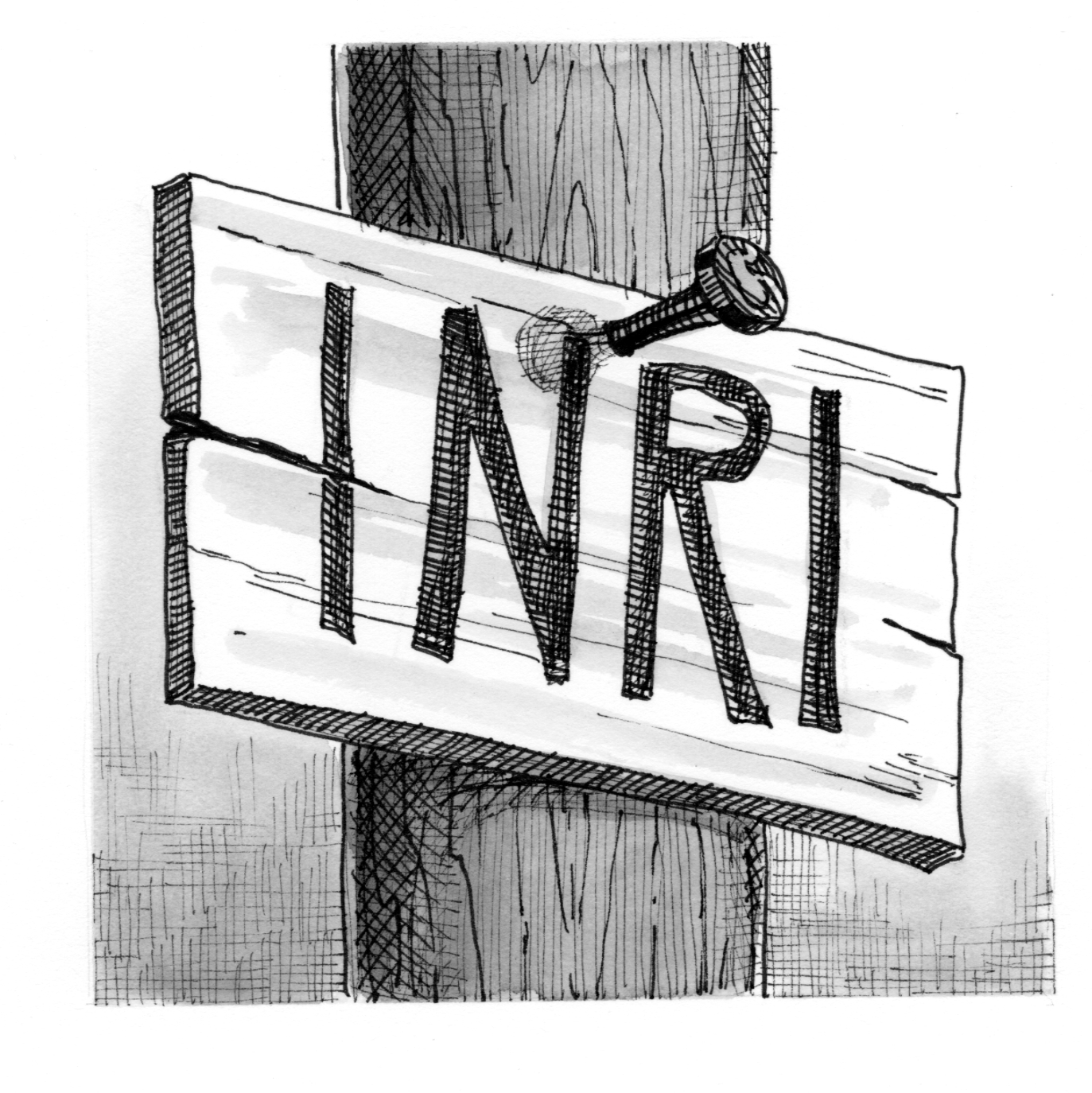
This posting describes in detail what the initials I.N.R.I. mean.

https://www.smp.org/resourcecenter/resource/1617/

UP TO 1,600 VIEWS

Recently, I recalled my time in Cambridge during Lent term commemorating Jesus’ last week on earth, also known as Passion Week. Although Pontius Pilate found Jesus innocent, he let Jesus to be crucified. He even gave Jesus a Latin title as inscribed in IESVS NAZARENVS REX IVDÆORVM, meaning Jesus The Nazarene, the King of Jews.” One may commonly find INRI on internet images as given above. 

King's College Cambridge Easter: O Sacred Head Sore Wounded:
JS Bach. YouTube Video by: spiritdei.

John 19:19-22. Pilate had a notice prepared and fastened to the cross. It read: "Jesus Of Nazareth, The King Of The Jews." Many of the Jews would have read this sign, for the place where Jesus was crucified was near the city, and the sign was written in Aramaic, Latin and Greek, languages commonly used then.


The chief priests of the Jews protested to Pilate, "Do not write 'The King of the Jews!'

"But this man claimed to be King of the Jews!"

Pilate answered, "What I have written, I have written!" 

Perhaps this sign is so important that all 4 gospels recorded it. Mark 15:26, Luke 23:38 and Matthew 27:37. Aramaic is closely related to Hebrew and was used by common Jews during Jesus’ era, while Hebrew remained the language of the upper class such as in religion and government. It was likely that Jesus and His disciples spoke Aramaic, in addition to Hebrew and Greek.

So what is the Hebrew translation of INRI: ישוע הנצרי ומלך היהודים (Yeshua` HaNatzri V'Melech HaYehudim. What is interesting and amazing is that the first letters of each of these words gives YHVH, more specifically (יהוה, pronounced as yod hey vav hey). This is the holy name of God. Unfortunately people call This Name, tetragrammaton (by inserting the English vowels, one gets the common found name as YeHoVaH) without knowing its significance. יהוה is recorded more than 6000 times in the Bible. The meaning of This Holy Name is explained in an earlier post below.


https://singapore60smusic.blogspot.com/2023/12/a-reflection-on-christmas-babys-name.html

Beautiful Hymn: Lead Me to Calvary

YouTube Video from: Celebrating Holidays.


Interestingly, during the ancient Passover Festival, Hebrew families would put the family name around the neck of the lamb that they took to the Temple as a sacrifice so that they may receive their own animal thereafter for their Passover dinner. 


For the Passover celebration in Jewish times, besides all Jewish males having to present themselves at Jerusalem, the High Priest would need to go to Bethlehem to find a firstborn lamb without broken bones and defect. After that, the High Priest would carry the lamb through the Eastern gate (old city of Jerusalem) to the Temple and numerous worshippers would be singing praises to God, waving their palm branches. There would be inspection over the next four days to confirm that the lamb was indeed without blemish. In the Temple days, at 3:00 pm the unblemished lamb for the Jewish nation was to be sacrificed and presented to the people.


The Parallel Account

Due to the Passover festival, there were already many people in Jerusalem when Jesus (firstborn of Mary) entered through the Eastern gate on a donkey but this time they were shouting Hosanna (meaning “save us”). Over the next four days, Jesus was examined by the Pharisees, Sanhedrin, Herod and Pilate. Eventually in Luke 23:4 “Then said Pilate to the chief priests and to the people, I find no fault in this man." After all interrogation, Jesus was crucified at 9.00 am and died at 3:00 pm without broken bones. Jesus is the Passover Lamb.

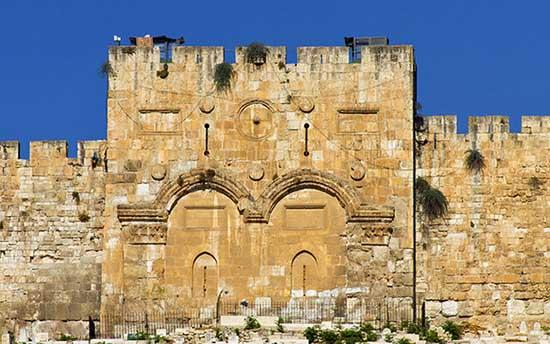
http://www.magdalenepublishing.org/wp-content/uploads/2017/11/Goldengate.jpg

This is the Eastern gate (also known as the Golden Gate, Acts 3:2). The Eastern Gate was sealed in AD 1540–41 by order of Suleiman the Magnificent, a sultan of the Ottoman Empire. 


Ezekiel 44:1–2, “The man brought me back to the outer gate of the sanctuary, the one facing east, and it was shut. The Lord said to me, This gate is to remain shut. It must not be opened; no one may enter through it. It is to remain shut because the Lord, the God of Israel, has entered through it.’”. Interestingly, this Golden gate will be open again when Jesus returns to the Mount of Olives (Zechariah 14:4) and enters Jerusalem by way of the re-opened Eastern Gate. 


[King Solomon once said, what has been will be again, what has been done will be done again; there is nothing new under the sun. Ecclesiastes 1:9]


Jesus was Crucified for my sins.

When Jesus died at 3:00pm, the Temple curtain separating the Holy and Most Holy places was torn into two. This was recorded in Mathew 27:50-51. Similar accounts are also given in Mark 15 and Luke 23. It is often interpreted that with the tearing of the curtain, we are now granted direct access to God in the Most Holy Place. However, there is no Ark of Covenant (as it was already lost) in the Most Holy place i.e. God’s presence is absent. Perhaps there is another take on the torn curtains i.e. in ancient times when a Jewish son died, the grieving father would tear his clothes.

Jesus Keep Me Near The Cross: 
YouTube Video from: Celebrating Holidays.


Grace and Blessing of God

It is worth noting that Passover is the only feast where God allowed the Israelites to celebrate one month later compared to other ancient feasts. Somehow this grace period seems to imply that there is still time to believe in Jesus as the Passover lamb for our unsaved loved ones and friends. There is still opportunity to repent and receive Jesus, as one’s personal Lord and Saviour. 


While the phrase “passion week” sounds sentimental or even romantic, in Latin “passion” really means suffering. However, there is great joy in this suffering of Jesus, as we now have access to the Living God, יהוה through His dying for our sins and His conquering of death through His resurrection. 


Wishing you and your family good health, peace and a Blessed Good Friday holiday.


Author: Dr. Phil Chan.

Author: Associate Prof.
Dr. Phil Chan. [NUS].

Thanks Phil for taking so much time during your busy schedule.
Appreciate your sincere ways in explaining biblical passages and
selecting suitable songs for the posting, for so many years now.
Andy.

The information on this article leads up to 
the hymns or gospels presented. 

Images: Google.